Create an assessment alignment map that connects syllabus outcomes, weekly teaching, assignment instructions, rubrics, dates, and student-facing requirements. The method below treats NotebookLM as a source-navigation and comparison aid, not as a substitute for domain judgment. Google’s current help documentation, checked on October 8, 2026, explains that imported material becomes a source used for answers, that users can select specific sources, and that inline citations can be opened in context. Those controls are useful only when the source set is deliberate and every important claim is reviewed.
This guide produces assessment alignment map. It assumes you have permission to use the documents and have removed personal, confidential, or restricted material. It also keeps the task distinct from general notebook setup: the objective is a reviewable evidence product for a syllabus and assessment instructions.
Set the course and document boundary
Collect the approved syllabus, assignment brief, rubric, weekly schedule, policy pages, learning-platform announcements, and any formally issued clarification. Record course code, term, section, document date, and version. Separate authoritative requirements from examples or informal advice. If different sections use different assessments, do not combine them. The first source note should state which document controls when wording conflicts and who can resolve ambiguity. NotebookLM can locate differences, but only the institution or instructor can determine the binding requirement.
Extract outcomes and assessment evidence
Create rows for each learning outcome and columns for where it is introduced, practiced, assessed, weighted, and described in the rubric. Quote the exact outcome rather than paraphrasing it into a broader skill. Then map each assignment criterion to the outcome it appears to assess. Mark unsupported criterion, outcome not assessed, and unclear alignment as separate states. This reveals whether students are asked to demonstrate something that was not stated or whether a promised outcome has no assessment evidence. It does not decide whether the curriculum is pedagogically sound without human review.
Build a requirement and date crosswalk
Extract submission format, word or time limit, permitted resources, collaboration rules, citation style, late policy, academic-integrity rule, accessibility process, due date, time zone, and resubmission conditions. Compare the syllabus, brief, rubric, and announcements cell by cell. For every conflict, cite both passages and record a resolution owner. Treat absence as unspecified, not permission. Dates deserve special attention because a schedule table, assignment page, and announcement can diverge after a change. Keep superseded versions so the decision trail remains visible.
Check teaching sequence against assessment timing
Map weekly topics, learning activities, formative practice, feedback opportunities, and assessment milestones on one timeline. Ask whether required knowledge appears before students must use it. Identify compressed periods, overlapping deadlines, and dependencies between assignments. A timeline can also expose a rubric criterion introduced only after a draft checkpoint. Do not infer that a topic was taught merely because it appears in a reading list. Use the syllabus schedule and verified course materials, then ask the instructor to confirm undocumented changes.
Use controlled prompts for alignment analysis
Select the syllabus alone and extract outcomes, schedule, and policies. Select the assessment brief and rubric to extract deliverables and criteria. Then select all sources and request an alignment matrix with citations on both sides. Ask: “Which requirements appear in only one document?”, “Which rubric criteria lack a clearly linked outcome?”, and “Which deadlines conflict?” Require unknown when the source set is silent. Save verified conflict notes rather than asking for a rewritten syllabus immediately. A polished rewrite can accidentally hide the evidence that a decision is still unresolved.
Review from the student’s point of view
Follow one assignment from first mention to submission. Can a student determine what to produce, how it will be judged, which resources are allowed, when it is due, and where to ask for clarification? Check accessibility language, alternative arrangements, group responsibilities, and feedback timing. Avoid uploading personal accommodation records or student submissions. The alignment map should improve clarity for everyone without exposing private data. Ask a student representative or colleague to test the final instructions because document consistency does not guarantee understandable language.
Create an assessment alignment map and action list
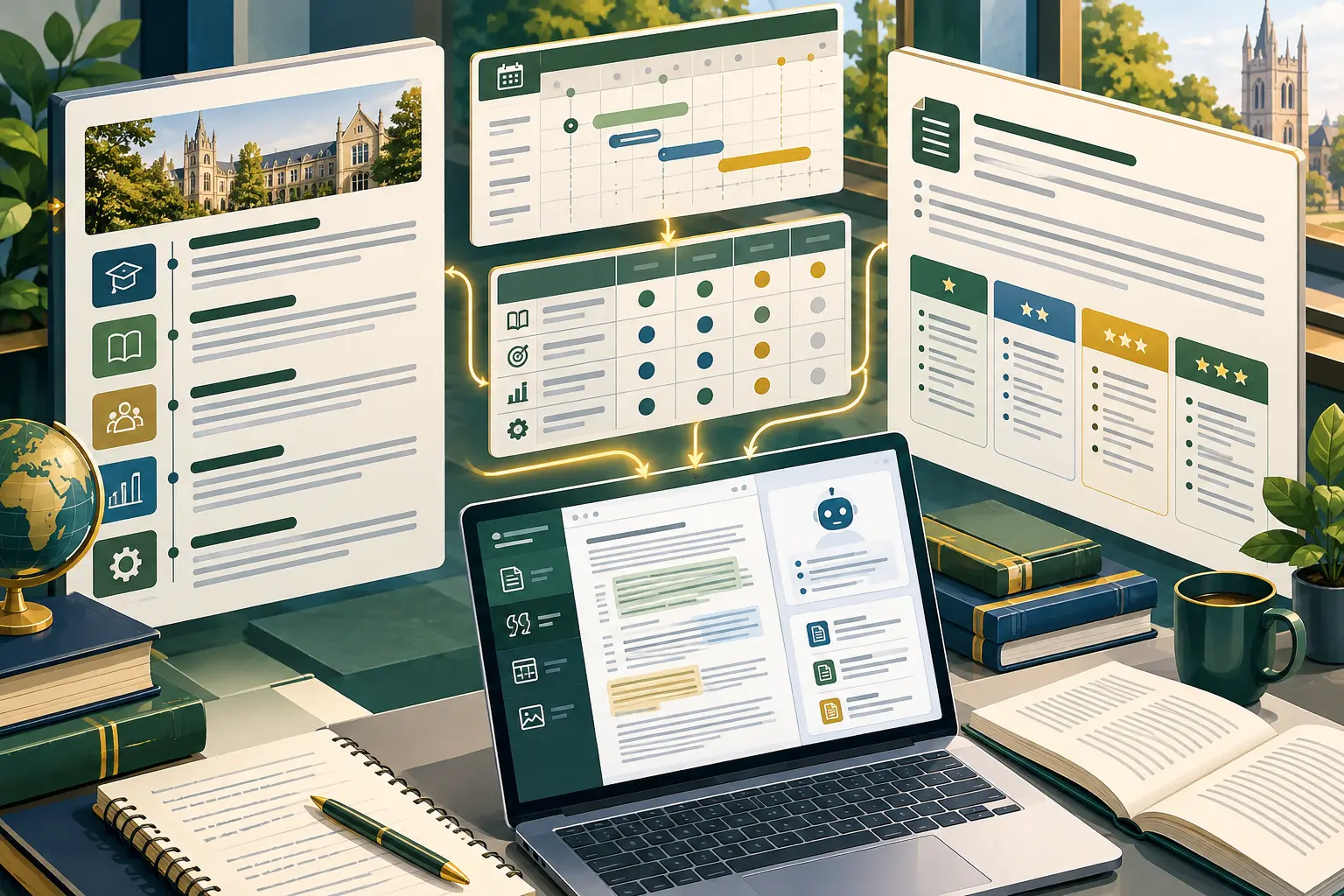
Deliver four views: outcome-to-assessment matrix, requirement crosswalk, teaching-and-deadline timeline, and conflict action list. Assign each issue an owner, decision, effective date, and communication channel. After corrections are approved, update the authoritative documents and then refresh or replace notebook sources. Do not leave the notebook as the only location of a rule change. The final check is simple: every requirement in the student-facing summary must trace to a current authoritative source, and every unresolved item must remain visibly unresolved.
A practical review sequence
Before drafting, open the source panel and verify that every file is the intended version. Google documents that Drive sources can update and that imported web pages may include only page text, while comments and footnotes from Google files may not be imported. Those limits matter whenever a conclusion depends on annotations, layout, or nested pages. Use a naming convention that includes date and version, select only the relevant sources for each question, and open the cited passage rather than trusting a summary.
Run three passes. The inventory pass asks what sources and fields exist. The comparison pass requests a table that keeps each source’s evidence separate. The challenge pass asks for contradictions, missing fields, boundary cases, and unsupported inferences. Save only checked findings. For a broader introduction to source selection and answer verification, read the NotebookLM research sources guide.
Frequently asked questions
Can NotebookLM decide which conflicting instruction is correct?
No. It can expose and cite conflicts, but the authorized instructor or institution must resolve them.
Should announcements be included?
Include official announcements when they change or clarify requirements, and record their date and relationship to the original document.
What if a learning outcome is not assessed?
Mark it for academic review. Do not invent an assessment link merely because the same general topic appears elsewhere.
Can student work be uploaded?
Avoid personal student data unless there is a lawful, approved need with suitable permissions and safeguards. This workflow normally needs course documents, not student submissions.
What is the final deliverable?
An outcome matrix, requirement crosswalk, timeline, and owned action list with citations to the current source documents.
Sources
Primary sources checked October 8, 2026. Product interfaces and limits can change; confirm the current help pages before relying on a specific capability.