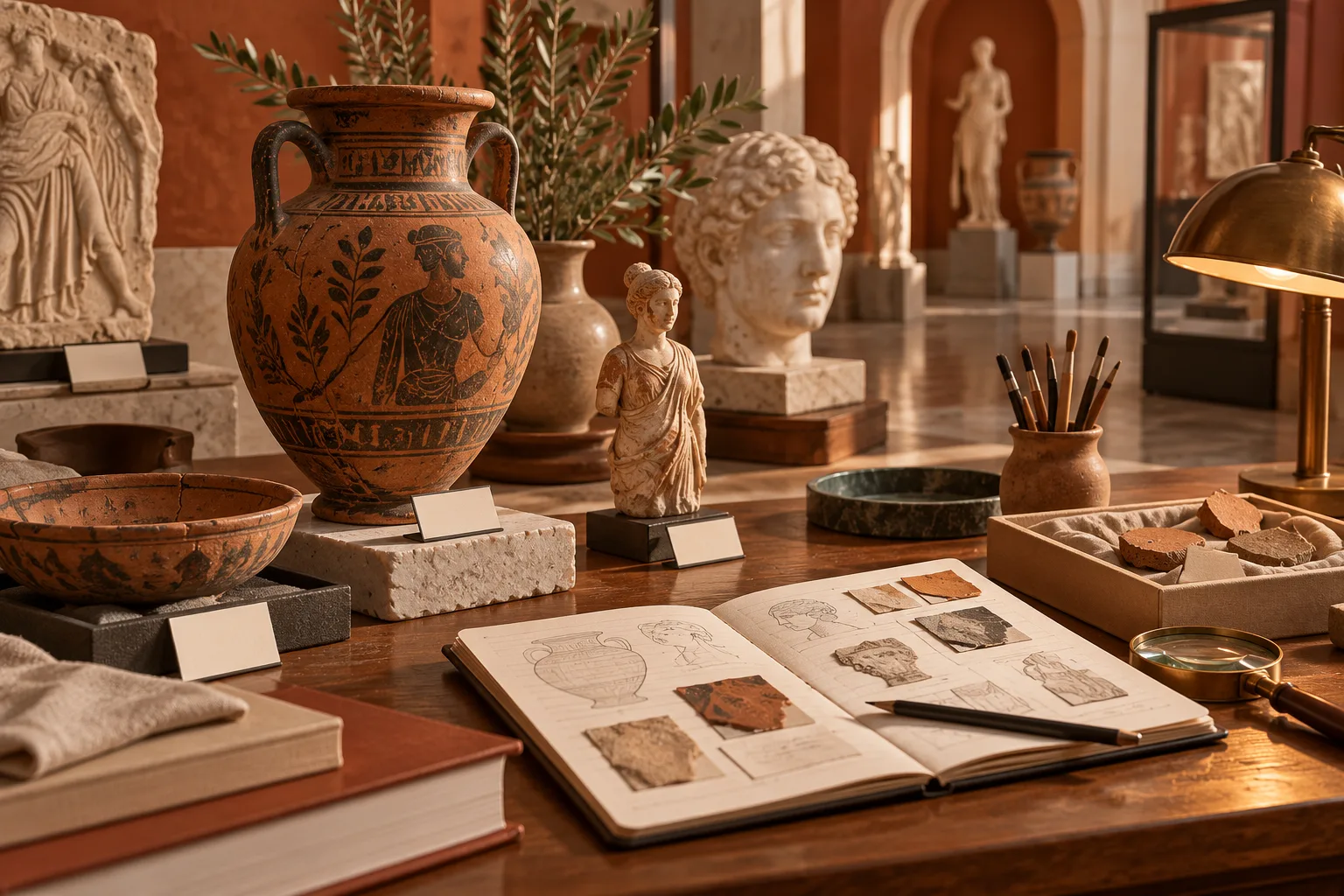
A museum exhibition research brief must connect objects, provenance, interpretation, and visitor-facing claims. A NotebookLM collection can help a curator organize those relationships while preserving uncertainty. The output is an exhibition research notebook whose evidence supports specific labels and themes, rather than a generic summary of an artistic period.
Primary sources checked on 8 October 2026. Worked examples and sample records below are illustrative; they do not represent product tests or real customer findings.
Naming note: Google’s current help pages use Gemini Notebook. This article retains NotebookLM in the task title so readers can connect the workflow to their existing notebooks; follow the current labels shown in your account.
Define the exhibition question and object boundary
Choose the proposed theme, date range, audience, and objects under consideration. Write the questions the research must answer: why each object belongs, what its history establishes, and which interpretation is proposed. Keep exhibition intent separate from factual provenance. An object can fit a theme even when its ownership history remains incomplete.
Assign object IDs before importing material. Titles and descriptions may vary across catalogs, so stable IDs prevent sources being attached to the wrong item. Record whether an object is confirmed, proposed, or unavailable. A notebook summary should not turn an aspirational loan list into an approved collection.
Curate catalog and provenance sources
Collect authorized catalog entries, collection records, scholarly essays, conservation notes, and curator-approved contextual documents. Label author, institution, edition, date, and object relationship. Separate a historical attribution from the institution’s current attribution. An old catalog can be evidence of past interpretation without establishing the present classification.
Respect reproduction and import rights. Inspect what the source viewer contains after import. Google’s source guide explains that web imports may not carry every visual or linked element, so do not assume the notebook has the full object image or all provenance links. Keep authoritative object records accessible outside the notebook.
Build an object-to-claim evidence map
Ask for one row per proposed label claim, with object ID, supporting record, source location, and qualification. Distinguish maker, date, material, origin, ownership, and interpretation. A source confirming material does not support a claim about cultural meaning. Keep interpretive connections attributed to the author or curator proposing them.
In an illustrative case, two catalog entries disagree about an object’s date range. The map should preserve both and identify which record is current. It should not choose an exact year merely to make the label cleaner. Qualified wording such as circa or attributed to can be essential evidence, not an inconvenience to remove.
Compare themes without flattening differences
Ask which objects support each theme and where the source collection offers counterexamples. Avoid a prompt that forces every object into the same narrative. A useful exhibition brief can explain why an object complicates a theme or shows a different context. Preserve distinct voices and the limits of the comparative frame.
Check whether the sources describe the same region, period, or practice. Similar visual forms do not automatically establish shared origin or meaning. Use the notebook to locate comparisons, then have the relevant subject specialist review them. Record where interpretation depends on expertise beyond the imported documents.
Draft label language from approved rows
Provide the reviewed evidence map and request short visitor-facing wording that retains attribution and uncertainty. Keep factual claims cited in the research version even when the public label format omits formal citations. The curator should be able to trace every claim back to its record. Avoid introducing dramatic stories unsupported by the collection.
Read the draft aloud for clarity, then compare it with the evidence again. Simplification can accidentally turn a tentative attribution into a definitive maker claim. Keep a research note for information too complex for a short label. The display text and the full research file serve different readers but should remain consistent.
Deliver the exhibition research notebook
Include the source manifest, object IDs, reviewed claim map, proposed themes, draft labels, and unresolved research questions. Assign ownership for disputed attribution, loan availability, rights, and missing provenance. These are separate workstreams; an elegant notebook overview cannot close them all.
Version the brief when the object list changes. Removing an object may remove the only evidence for a theme, while a new loan can introduce different rights or conservation conditions. Preserve the earlier research and explain the effect of changes. A useful notebook supports curatorial judgment by organizing evidence, not by pretending the exhibition narrative is inevitable.
Review and preserve the finished exhibition research notebook
Before handing over the result, perform a review that starts from the evidence rather than the generated prose. Pick a clearly supported item, a disputed item, and an item with missing information. Write the expected treatment of each before reading the proposed conclusions. Then open the cited originals and compare the result with those expectations. Check the surrounding text, headings, dates, and qualifications, because a citation can point to the correct document while supporting a narrower statement.
Ask a colleague to use the finished deliverable without your explanation. They should be able to locate the original records, identify unresolved questions, and understand which statements are direct evidence and which are your interpretation. Revise any place where they must guess. Keep the reviewed output, source manifest, prompt, and correction history together. Record the review date and the event that should trigger another check. When a source changes, preserve the earlier assessment and explain which conclusions were affected rather than silently replacing the evidence.
Do not equate an empty result with the absence of a problem. Check that all intended inputs were included and readable. Explain exclusions and merged records. A useful handover makes incompleteness visible and assigns a next action to the person who can resolve it.
Frequently asked questions
Can a notebook establish an object’s provenance?
It can organize the available records; provenance conclusions require appropriate source assessment and specialist review.
Should uncertain dates be simplified?
Preserve justified uncertainty such as ranges or circa rather than inventing an exact year.
Do imported web pages include all images?
Do not assume that. Inspect the viewer and retain authoritative object images and records separately.
Can every object be forced into one theme?
Avoid that. Record counterexamples and objects that require a different interpretation.
What should the brief contain?
Object IDs, source manifest, claim map, proposed themes, reviewed label drafts, and owner-assigned research gaps.