
Reviewed 6 October 2026. Product statements are grounded in the linked documentation. Workflows and fictional examples are editorial guidance.
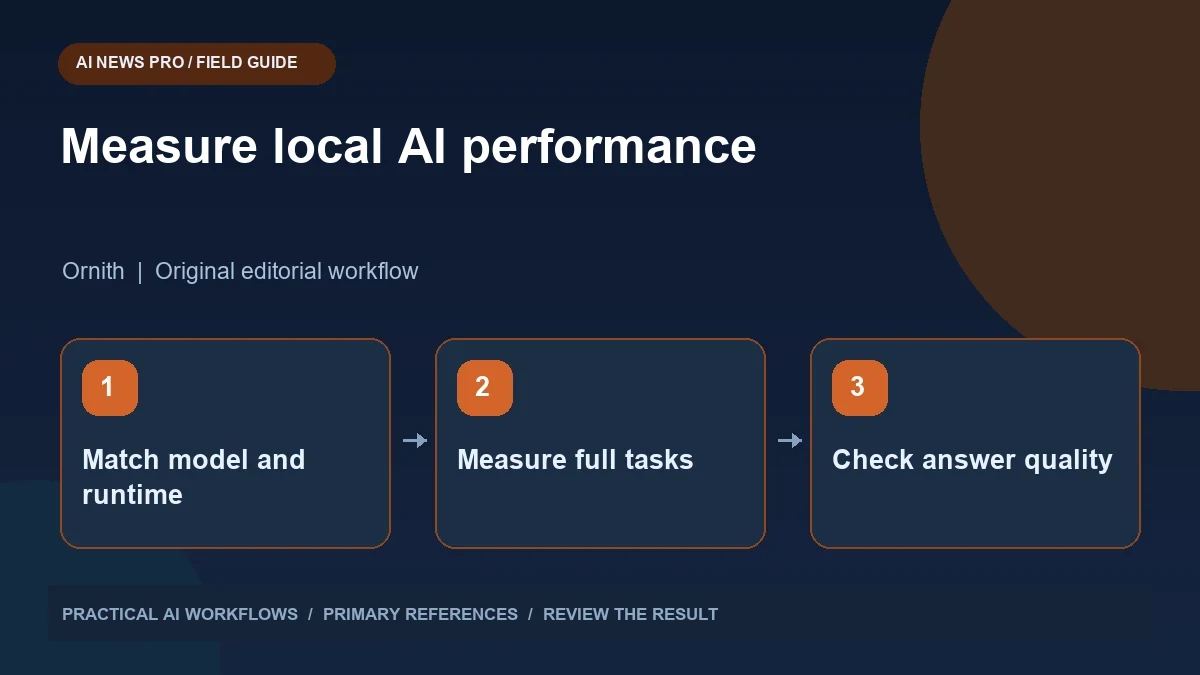
Original AI-generated concept illustration.
Evaluate a new model on your own task
A newly available coding model is worth exploring when it can solve a task you understand and can test. A website demo can look impressive while hiding broken navigation, missing validation, or invented content. For Ling 3.1 Flash, a practical evaluation is more useful than repeating a headline about model size or speed. Choose a small project, set an acceptance checklist, and compare the reviewed result with your current coding workflow.
OpenRouter lists Ling 3.1 Flash as an inclusionAI hybrid reasoning mixture-of-experts model with 25 billion active parameters out of 560 billion total and a roughly 262K context window. Its listing shows a free price at the time of this check. These are provider-reported details, not measurements from this guide. Confirm current availability in the provider and coding client you actually use. A model listing does not guarantee that every OpenCode installation has the same configuration.
Documentation: Ling 3.1 Flash provider listing.
Set up a bounded coding experiment
Create a new folder for the experiment rather than pointing an unfamiliar setup at your working website. Use a project that needs no sensitive information or external account connections. A good example is a local article filter with three fictional posts, category buttons, and a search input. Define what must work: text search, category filtering, an empty-results message, keyboard access, and a layout that remains readable on a narrow screen. State that all assets must be local.
Before generating code, record your client version, selected model, provider, and relevant settings. Update the client through its documented method if the model is missing, then inspect the available provider configuration. Avoid assuming that a similarly named model is the exact model you intended. If you need an API key, use the client's documented credential storage and keep it out of project files. Retain enough setup information to reproduce the experiment later.
Write a prompt that exposes real capability
Ask for the behavior, constraints, and expected deliverable together. For example: build a static article filter in this empty folder; use three supplied records; preserve their titles and excerpts; support search and categories; show a helpful empty state; and explain how to run it locally. Ask the assistant to avoid adding a backend, login, or tracking. These constraints reveal whether the model follows a brief instead of drifting toward a larger application.
Request a short implementation plan before edits if the task involves several files. Check whether the plan matches the acceptance checklist. Allow a focused question when a necessary detail is missing, but supply ordinary defaults for visual choices that do not matter to correctness. Once the model begins, inspect its changes rather than judging progress by the amount of explanation. A coding evaluation should end with a working artifact and observed checks, not merely a confident completion message.
Test the first result systematically
Open the project and run each acceptance case. Search for a title, then for a word that appears only in an excerpt. Apply a category and confirm that search still works inside it. Remove all filters and verify that the complete set returns. Try a query with no matches and a query containing extra spaces. Use the keyboard to reach controls. Resize the page and look for overflowing labels or hidden content. These simple cases often expose gaps that a polished screenshot misses.
Check the data as well as the interface. Confirm that the three supplied records are preserved and that no fictional performance claims appeared in the page. Inspect links and image paths. If the model added dependencies, determine whether they are necessary for the requested static tool. Run any relevant build or syntax check available in the project. Keep a list of observed defects with exact reproduction steps so the next prompt asks for a specific repair.
Separate model errors from service failures
A failed request can result from rate limits, provider availability, connection problems, or client configuration. That is different from a generated implementation that misunderstands the task. Record the error category before retrying. If a request fails before any code is produced, do not count it as a coding-quality failure. If the output is incomplete, preserve the existing files and ask for a bounded continuation rather than repeatedly regenerating the whole project.
For a free endpoint, plan a modest trial instead of assuming continuous access. Check whether the provider publishes limits or availability information. A useful fallback is a saved brief and accepted file checkpoint, which lets you continue with another available model without losing the requirements. Avoid drawing conclusions from one unusually fast or slow response. Repeated trials with comparable inputs give a more honest picture of whether the setup fits your daily work.
Compare total repair effort
Measure elapsed time, successful acceptance cases, and the number of repairs required. A fast first draft that takes many corrections can be less useful than a slower draft that preserves the brief. Compare models on the same task with the same input and test cases. Keep visual preference separate from functional correctness. If one result looks nicer, note that benefit without allowing it to conceal a broken filter or incorrect content.
Inspect how the model responds to feedback. Give it one precise defect, such as category buttons losing the active state after a search, and ask for a minimal fix. Check whether it repairs the defect without breaking unrelated behavior. This revision test matters because most real coding work involves existing code and constraints. A model that can create a demo but cannot make a focused repair may require more supervision than the initial generation suggests.
Decide where the model belongs
Use the evaluation record to choose an appropriate role. A model that handles small interface tasks well may be useful for prototypes or low-risk helper tools. More consequential changes need stronger testing and review. Do not turn a successful static demo into a claim that the model can build any production system. Describe the specific task it completed, the failures observed, and the conditions under which you would use it again.
Save the accepted brief, test checklist, and reviewed files together. Recheck the setup when the model, provider, or client changes. For longer projects, use smaller milestones with explicit completion criteria rather than asking for an entire product in one prompt. This reduces the cost of partial failures and makes it easier to compare outputs. The practical value of a new model is the work it reliably completes in your environment, not the excitement of its release title.
Frequently asked questions
Is Ling 3.1 Flash always free?
The checked provider listing shows a free price, but availability and conditions can change. Verify the actual endpoint before using it for a recurring workflow.
Does a large context window mean every file will be used correctly?
No. Provide relevant files and explicit requirements. Test whether the result preserves important details instead of assuming context capacity guarantees attention or correctness.
What should I do if the model is missing in OpenCode?
Check the current client documentation, version, and provider settings. Confirm the exact model identifier rather than substituting an unrelated model with a similar name.
What is a fair coding comparison?
Use the same brief, input, and acceptance cases. Compare reviewed functionality and repair effort, while recording service failures separately from code-quality defects.
Resources and related articles
Continue with DeepSeek Harness Plugins: From Task Brief to Tested Extension, DeepSeek Harness Desktop: Plan Repeatable Agent Workflows, or Gemini for Coding: Debug Small Reproducible Problems.